Wednesday, October 20, 2010

Fresh & Easy Neighborhood Market Gives Away 200,000 Reusable Bags in September; Now it's Up to Shoppers to BYOB

Reusable Bags: News & Views

Thousands of shoppers in California, Nevada and Arizona have one less of an excuse than they did a month ago not to bring their own bag to the grocery store, which Tesco hopes is one of its 168 Fresh & Easy markets.

Fresh & Easy Neighborhood Market's neighborhood affairs director Roberto Munoz said today the fresh food and grocery chain handed out over 200,000 free reusable canvas carrier bags to customers last month, between September 15th and September 30th.

The reusable bag Fresh & Easy gave away to shoppers in September is its 99-cent reusable canvas bag (pictured top, left), which as we reported in this piece - December 7, 2008: Fresh & Easy Offers New Definition of 'Double Bagging;' Says Sales of Reusable Bags Has Doubled Since Introducing its 99-Cent Bag in October - the grocery chain introduced in October 2008.

Fresh & Easy Neighborhood Market distributed coupons for the September 2010 free canvas bag promotion, which required a minimum purchase of $10 to get a free bag, via its direct mail advertising flyers, as well as on its website, Facebook page, Twitter feed, and through its 'Friends of Fresh & Easy' e-mail promotional mailer. The reusable bags were also handed out to customers at the fresh food and grocery chain's September 2010 new store grand opening celebrations in California.

800,000 free reusable bags so far

September's wasn't the first reusable bag giveaway Tesco's Fresh & Easy has held. It's offered free bag promotions, usually giving the bag away with a minimum $10 purchase, fairly regularly since introducing its 99-cent canvas bag in October 2008.

And, according to Munoz, the grocery chain has given away about 800,000 reusable shopping bags to shoppers since opening its first stores in November 2007.

Fresh & Easy Neighborhood Market offers a variety of reusable bags in its 168 stores in Southern California and the Central Valley; metro Las Vegas, Nevada; and metro Phoenix, Arizona. In addition to the 99-cent canvas bag, there's also a reusable bag made out of organic canvas, which sells for $2.99, and a reusable canvas bottle bag, which retails for $1.99.

The grocer also offers an inexpensive reusable bag which it calls "bags for life." The bags are made out of a synthetic plastic-type material and sell for 20-cents each. Fresh & Easy offers to replace the bags free of charge when they wear out, hence the name. The 'bags for life" are popular in the United Kingdom, where Fresh & Easy's parent company Tesco is based.

Tesco's Fresh & Easy offers free single-use plastic carrier bags in its stores but doesn't offer free paper grocery sacks as an option, unlike virtually all of its competitors in California, Nevada and Arizona do.

Incentives: Paper, plastic or reusable

Fresh & Easy Neighborhood Market is attempting to get as many customers as it can to BYOB - bring their own bags to the store - through offering a variety of reusable bag options at various price points, it's bag giveaways and promotions, and by other means.

For example, Munoz says Fresh & Easy is also encouraging the use of reusable bags in its stores by adding in-store reminder signage, merchandising reusable bags closer to the checkout stands and giving away magnets featuring messages that remind customers not to forget their reusable bags at home.

Reusable bag use remains low in the U.S.

Despite free bag giveaways like those conducted by Fresh & Easy Neighborhood Market and numerous other U.S. grocers, which also offer reusable bags for 99-cents or a dollar, few consumers bring their own bags to the grocery store. Various studies estimate that a mere 5%-10% of Americans regularly bring their own bags with them when they go shopping.

In California, where Tesco has 107 of its 168 (soon to be 155. See:13 Closing Fresh & Easy Stores List) Fresh & Easy stores, promoters of legislation to ban single-use plastic carrier bags were dealt a blow this summer when a bill, AB 1998, designed to do just that, was defeated in the California State Senate. [See - August 31, 2010: Breaking Buzz: California's Single-Use Plastic Carrier Bag Ban Bill Fails.]

Since the defeat of the statewide bill, which was supported by the California Grocers Association, the trade group for grocers doing business in the state, numerous California cities has dusted off plastic bag ban bills which they're now considering proposing. Various sources say four -to- five dozen California municipalities are currently considering single-use plastic carrier bag bans or laws that would charge a fee for the bags. [See - September 3, 2010: How the California Grocers Association and its Members Can Snatch Victory From the Jaws of the Defeat of California's Plastic Bag Ban.]

A few California cities, including San Francisco and Malibu, have had single-use plastic carrier bag ban laws in place for some time. Others, such as Oakland and Manhattan Beach, passed such laws but had them struck down in the courts, in lawsuits filed by the plastic bag industry.

In 2009, the first federal bill that would have placed a fee on single-use plastic carrier bags was killed in committee in the U.S. House of representatives before being able to get a vote on the House floor. [See- April 23, 2009: Virginia Congressman Jim Moran Introduces First-Ever Federal Single-Use Bag Fee Legislation Into U.S. House of Representatives on Earth Day 2009.

Putting the 'PR' in reusable bag use

Reusable bag promotional programs like Fresh & Easy's and those regularly conducted by other food and grocery retailers, along with public relations programs by non-profit groups and others to encourage greater use of reusable bags, are a good and positive thing - the more incentives the better - but until shoppers decide to take personal responsibility (PR) and bring their own bags to the store in greater numbers, not only will we not see much of a trend towards increased reusable bag use, we'll also continue to see state and local governments attempt to influence retailer and consumer behavior by proposing and passing various laws designed to eliminate single-use plastic bags, and in some cases paper bags, and to promote the use of reusable bags via legislation.

Reasonable people can differ on whether or not it's the place of government to tell consumers what kind of carrier bag they can get at the grocery store and to restrict the types of bags retailers can offer to shoppers.

But in the final analysis one thing is clear, as is the case with most forms of behavior change, increasing the use of reusable bags at the grocery store is in the hands of consumers. For example, you can be given a dozen free reusable carrier bags from our favorite grocer but you we don't bring them to the grocery store and use them, which is the case with many consumers, then the incentive is a moot point.

Regular incentives, which we encourage and congratulate grocers and others for promoting, will no doubt increase the use of reusable bags by shoppers, at least incrementally. But until consumers decide to change their collective behavior and BYOB, the percentage will remain low.

Reader Resources

[Fresh & Easy Buzz has written extensively about reusable grocery bags and the single-use bag topic and issue. For a selection of those stories click here, here and here. Use the "Older Posts, "Newer Posts" links at the bottom of the linked pages for additional pages and stories.]

Tuesday, October 19, 2010

Walmart's Four 'Marketside by Walmart' Stores Set to Be Closed Soon Never Came Close to Weekly Sales of $100,000

Arizona Market Region Report - News & Analysis

In a September 9, 2010 story - Walmart Plans to Close Arizona 'marketside by Walmart' Stores, Dump Format By Year-End or Early 2011 - we broke the news Walmart Stores, Inc. would be dumping its 'marketside by Walmart' small-store fresh food and grocery format, including closing the four existing stores in Arizona.

We followed the September 9 story up with a piece on September 23 - Revisting 'marketside by Walmart': Format As We Know it On the Way Out But Some or All Of the Four Stores Could Be Converted - in which we reported Walmart was discussing potentially converting some or all of the 'marketside by Walmart' stores into a different small-format, most likely the version of its 20,000 square-foot 'Neighborhood Market by Walmart' prototype it plans to roll out to the tune of about 30-40 stores in 2011. [See - October 13, 2010: Simon Says: Walmart U.S. CEO Outlines Smaller Store Strategy and Plans; Walmart to Offer Groceries Online in USA]

The reason for the follow-up story in late September was because not only has 'marketside by Walmart' been neglected for over a year by Walmart Stores, Inc. - for example one of the managers of the four stores in Arizona is and has been running two units at the same time since early this year - but a decision as to whether or not to close all the stores or try to salvage one or more by converting to the new small-format the retailer plans to roll out next year has been up in the air.

On Wednesday, October 13, Walmart U.S. president and CEO Bill Simon confirmed half of our early September 2010 report at the retailer's annual investment community conference, saying the Walmart Stores' does not plan to expand 'marketside by Walmart' beyond the current four stores, commenting the retailer has learned a great deal from the stores and has been able to create a multi-million dollar fresh foods brand, 'marketside,' which it's selling in its Walmart supercenters and Neighborhood Market supermarkets, based on operating the stores. Simon didn't announce plans to close any of the stores or convert them to another small store format at the conference however.

It was the first time a Walmart Stores' executive has said publicly that the retailer would cease any further development of 'marketside by Walmart.' Earlier this year Walmart said publicly it wouldn't open any additional 'marketside by Walmart' stores this year - but did not say it wouldn't do so beyond 2010.

Based on the information we have at present, it's remains most probable Walmart will close all four of the Arizona 'marketside by Walmart' stores by the end of December and no later than the end of January 2011 or convert some or all of the four stores into a new small-format.

Average Weekly Sales: 'marketside by Walmart' Stores

None of the four 'marketside by Walmart' stores have or are doing even close to $100,000 in weekly sales, according to our excellent sources. The four metro Phoenix area stores are located in Gilbert, Tempe, Mesa and Chandler, Arizona. All four stores opened in May 2008.

The Gilbert unit has been doing the best of the four, averaging about $68,000 a week in sales, our sources say.

The other three metro Phoenix 'marketside by Walmart' units are all doing below $50,000 a week in sales, our sources say.

They estimate the Chandler, Arizona store is averaging $48,000-$49,000 in weekly sales; the Mesa unit $33,000-$35,000; and the Tempe store about $40,000 weekly.

Two of the stores are in the 15,000 square-foot range. The other two are between 16,000-18,000 square-feet. According to the most current FMI (Food Marketing Institute) statistics, the average U.S. supermarket has sales-per-square-foot of $11.35. All four stores have been and are doing way below the $11.35 per-square-foot industry average.

In our analysis, these average weekly sales numbers make it unlikely that Walmart will put a different small-store format in any of the current four 'marketside by Walmart' stores when it closes them at the end of this year or in early 2011, although the retailer may believe a different format can make a go of it at the locations.

We'll have more for you very soon. Stay tuned.

'Marketside by Walmart' - Follow the Story Below

>December 21, 2009: Wither Walmart's Small-Format 'marketside' Stores and Format?

>January 9, 2010: Walmart's 'marketside': What's 'In-Store' for 2010?

>September 9, 2010: Walmart Plans to Close Arizona 'marketside by Walmart' Stores, Dump Format By Year-End or Early 2011

>September 23, 2010: Revisting 'marketside by Walmart': Format As We Know it On the Way Out But Some or All Of the Four Stores Could Be Converted

>July 6, 2010: Walmart Looking for Store Sites in Northern California For 20,000 Sq-Ft Neighborhood Market by Walmart Prototype Store

[For a selection of additional past stories on Walmart's 'marketside' and 'marketside by Walmart' click here and here.]

Monday, October 18, 2010

Supervalu's Small-Format, Hard-Discount Save-A-Lot Food Stores Chain is California Bound


Breaking Buzz & Analysis

Supervalu, Inc.'s small-format, hard-discount Save-A-Lot Food Stores chain confirmed today by its significant presence at the 2010 California Grocers Association's (CGA) Strategic Conference in Las Vegas, as well as by its sponsorship activities and comments made by representatives for the retailer at the event, what Fresh & Easy Buzz has been saying for some time - it wants a healthy piece of California's food and grocery retailing pie.

The annual conference, which kicked off yesterday with registration and a golf tournament, is being held at the Mandalay Bay Resort and Casino in Las Vegas. It runs through tomorrow, October 19.

There are currently only a handful of Save-A-Lot stores in California. Those few stores are located in Southern California the Central Valley region.

But Save-A-Lot, which operates on a mixed franchise-license/corporate ownership model, is out to change that. (About 75% of the 1,200 Save-A-Lot stores in the U.S. are owned by independent operators. The remaining 25% of the stores are corporate owned.)

Last night Save-A-Lot Food Stores, which is exhibiting at the trade show portion of the conference which began this afternoon and runs through tomorrow, along with Kraft Foods, sponsored the annual opening reception (from 6 p.m.-8 p.m), which is a high profile event for the grocers, suppliers and others who attend the conference. It's also designed to be a high-profile event for the companies that provide the sponsorship, which is why those doing so, like Save-A-Lot, seek it out.

There was discussion at last night's reception, including from Save-A-Lot representatives, that the discount grocer is looking to open numerous stores in California, which is the reason it's not only exhibiting at the CGA conference and trade show but also why it sponsored and co-hosted the high-profile annual opening party: To draw attention to itself and its plans in California.

At its booth on the exhibition hall floor today, Save-A-Lot representatives were armed and ready with information, as well as being prepared to sit down and talk with grocers and others who might be interested in becoming Save-A-Lot licensees-franchisees in California.

The chain has certain regions and territories - a strategic blueprint - where it plans to open stores in the Golden State, including possibly a number of corporate-owned units, although its preference is for independent operators. It's looking for existing grocers, groups and individuals, as well as qualified business people not currently in the grocery retailing business, to become independent owner-operators of single stores and multiple groups of stores in California.

One of the representatives at the Save-A-Lot booth on the exhibit floor told a Fresh & Easy Buzz correspondent that the Supervalu, Inc.-owned chain, which operates independently, including having its own corporate headquarters in St. Louis, Missouri and its own senior executive team, led by CEO Bill Shaner, plans to open numerous stores in California over the next five years.

This tracks with Supervalu CEO Craig Herkert's plans to double the number of Sav-A-Lot stores in the U.S., from the current about 1,200 to about 2,400, over the next five years, which is something we've previously reported on and written about in Fresh & Easy Buzz. [See - April 20, 2010: CEO: Supervalu to Open 100 New Sav-A-Lot Stores This Year; Strategy to Double Store-Count to 2,400 in 5 Years in Place.]

Supervalu, Inc. has a significant presence in Southern California through its ownership of the Albertsons supermarket chain (number three market share after Kroger's Ralphs and Safeway's Vons). It also owns the upscale Bristol Farms chain in the region.

However, with the exception of a couple Save-A-Lot stores in the southern Central Valley and one Bristol Farms supermarket in San Francisco, Supervalu has no presence in Northern California or the Central Valley region, where about 35-40% of California's nearly 40 million residents live. Save-A-Lot would be Supervalu's best food and grocery retailing vehicle overall, among the numerous formats it has, to reverse that, in our analysis. Not everywhere, but in the right markets.

Additionally, with only a couple Save-A-Lot units in Southern California, the vast region where the remaining about 60% of Californians live is wide open for the small-format, hard discount grocer.

As a matter of fact, the entire Western U.S. (and much of the Midwest) is wide open for Supervalu when it comes to opening Sav-A-Lot food and grocery stores.

Take a look at the map here, it tells the story graphically very well. Notice that all the colored dots on the map, which represent Save-A-Lot stores, are in the Mid-Atlantic, eastern and some Midwestern portions of the U.S., while there's virtually no stores west of the Rocky Mountains. And since Save-A-Lot is headquartered in St. Louis, which happens to be called "The Gateway to the West," coming west is the logical next move. It's also logical since Supervalu plans to double the number of Save-A-Lot units between now and 2015. The vast west is vastly empty of Save-A-Lot stores.

California doesn't have a small-format, limited assortment, hard-discount grocery chain on the order of Save-A-Lot or Aldi USA, which has all of its current 1,000-plus U.S. stores east of the Rocky Mountains, as a major player in the state. Aldi USA has come as far west as Texas thus far. The two are the leading chains of the format in the U.S.

The current state of the California economy, which includes having the third-highest jobless rate (12.5%) among the 50 states, should offer a warm climate for hard-discount Save-A-Lot in the state.

Additionally, there are numerous vacant retail stores available at extremely favorable lease rates in the California, from the south to the north and everywhere in between. This abundance of properties at favorable rates, which is going to be the case from a number of additional years in the state, offers what likely will be a once in a decade opportunity for a chain like Save-A-Lot, and independent franchise owners, to grab numerous locations at extremely advantageous monthly rent amounts and long-term lease rates.

The one key limiting factor for Save-A-Lot in California at present is that because of the less than stellar economy and ongoing depressed residential and commercial real estate markets, it could be difficult to get more than a few independent owner/operators to become Save-A-Lot licensees-franchisees in the Golden State because access to capital is still rather limited, although it is improving somewhat.

Despite this economic and capital situation though, fast-growing Berkeley, California-based salvage and discount grocery chain Grocery Outlet, which operates on a licensing-franchise system similar to Save-A-Lot's, has been finding independent operators left and right in California and elsewhere in the west, where it's been opening one or more new stores about every other month since last year. Most of the new stores opening have been in California. Grocery Outlet plans to double its about 130 store count over the next few years.

One solution to this potential problem would be to build and open numerous corporate-owned Save-A-Lot stores and then franchise them out to independent owners as the franchisees become available. Convenience store chain 7-Eleven has and is doing this with considerable success in California, for example.

Another possibility is to get established, privately-held California grocery chains to become franchisees. This is something grocery wholesalers have done with much success in the state with the Food For Less discount grocery store format, for example.

There are a number of privately-held chains, such as Woodland, California-based Nugget Markets, that own and operate multiple Food For Less stores, which comprise a part or all of the retailer's chain. Nugget, which was founded in 1926 and remains owned by the Stille family, operates both the Food for Less discount stores and its upscale Nugget Markets.

PAQ Inc. (see here) is an example of a chain that's comprised completely of Food 4 Less stores. There are nine units in numerous cities in Central California's valley and coastal regions. And the Food 4 Less chain in Southern California owned by Kroger Co. got its origin as a privately-owned chain comprised of franchised Food 4 Less stores.

The annual CGA conference and trade show, which has the theme of "Express Lane to Success" this year, runs through tomorrow.

The annual event, which is sponsored financially by food, grocery and related companies that sell to and do business with the state's chain and independent grocers (collectively known as the trade), and related trade show is a key networking event for grocers doing business in California, their suppliers and service providers.

The networking takes place at formal events like the Sunday golf tournament, the opening reception hosted by Save-A-Lot and Kraft Foods mentioned earlier, and other social events hosted by The Illuminators, which is an organization comprised of members of the California grocery trade.

But the networking, which representatives of Supervalu's Save-A-Lot are doing some of right now in Las Vegas, also happens, and frequently in more interesting and productive ways, at informal venues like the golf course, restaurants, hospitality suites set up by suppliers and food brokerage firms, casino bars and gaming tables, and other Vegas hot spots.

Tesco's Fresh & Easy Neighborhood Market is a member of the California Grocers Association, as are all of the leading chains in California - Kroger's Ralphs, Safeway Stores, Albertsons, Stater Bros, Save Mart, Raleys and others - and most key independents.

Related Stories

April 20, 2010: CEO: Supervalu to Open 100 New Sav-A-Lot Stores This Year; Strategy to Double Store-Count to 2,400 in 5 Years in Place

June 27, 2010: The Insider: Will Tesco Acquire Supervalu, Inc. and Change its 'Fresh & Easy' Game in America?

September 13, 2010: Reading Philip Clarke's Tea Leaves: Might A Mixed Corporate/Franchise Model Be in Fresh & Easy Neighborhood Market's Future?

April 29, 2010: Heard on the Street: There's Something About Albertsons ... In Southern California

December 4, 2008: Competitor News: Supervalu Inc.'s Small-Format, No Frills, Extreme Value Sav-A-Lot Chain Beefing Up its Executive Ranks as Part of its Growth Program

March 25, 2009: Supervalu, Inc. Introduces New, Value-Plus-Convenience Meal Solutions Program; Features Refrigerated Case 'Meal Centers' in Multiple Store Departments

September 3, 2010: How the California Grocers Association and its Members Can Snatch Victory From the Jaws of the Defeat of California's Plastic Bag Ban

Sunday, October 17, 2010

No Additional New Fresh & Easy Neighborhood Market Stores Set to Open This Year; Ten New Units Planned For January 2011


Breaking Buzz

United Kingdom-based Tesco isn't planning to open any additional new Fresh & Easy Neighborhood Market stores this calendar year, Fresh & Easy Buzz has learned. No new stores are set to open in October, November or December 2010 at present, and likely won't be.

However, the retailer is currently planning to open 10 new stores in January 2011, according to our sources. All 10 stores are in Southern California.

New store openings are dynamic and fluid at Fresh & Easy Neighborhood Market headquarters in El Segundo, California. Therefore, the current 10 planned store openings for January 2011 could change in either a plus or minus direction between now and the end of 2010.

Tesco opened nine new Fresh & Easy stores in September. [See - September 22, 2010: California Dreamin': Fresh & Easy Neighborhood Market, Whole Foods Market Combined Open a Total of Four Stores Today in California.]

Fresh & Easy Neighborhood Market was originally considering opening at least three new stores in November 2010. However, that was before Tesco decided to close 13 Fresh & Easy stores - six each in metro Phoenix, Arizona and metro Las Vegas, Nevada, and one unit in Southern California - which it announced on October 5. (there's a list of the addresses of the 13 locations set to close by November 2, 2010 at the top of Fresh & Easy Buzz. Just click the "13 Closing Fresh & Easy Stores List" link.)

Tesco's Fresh & Easy is now in the process of closing the 13 stores. It plans to board the stores up, something it's referring to as "mothballing," saying it might open some or all of the units up again at some time in the future.

All 13 stores are set to be shuttered by November 2, 2010.

Fresh & Easy's real estate department is also trying to sub-lease the stores, which will be difficult, particularly in metro Phoenix and metro Las Vegas, where there's an abundance of vacant retail commercial real estate on the market currently. Apparently "mothballing" is a situational process. If Fresh & Easy is fortunate enough to sub-lease some or all of the stores, that would tend to render opening the stores up in the future a moot point, wouldn't it?

As of today there are 168 Fresh & Easy stores - 93 units in Southern California; seven stores each in metro Bakersfield and metro Fresno, in California's Central Valley; 34 units in metropolitan Phoenix, Arizona; and 27 stores in metro Las Vegas, Nevada.

After closing the 13 stores, Fresh & Easy Neighborhood Market's store-count will be 155. There will be 92 units in Southern California, 28 stores in metro Phoenix, and 21 units in metro Las Vegas. The Bakersfield and Fresno region store numbers will remain unchanged.

On October 5, 2010, Tesco said it plans to open 19 Fresh & Easy stores over the next six months. [See - October 5, 2010: Philip Clarke's Early Welcome to America: Tesco Logs $151 Million Half-Year Loss For Fresh & Easy Neighborhood Market]

The new store opening schedule - 19 stores over the next six months or so - tracks with our research and analysis. Besides the 10 Southern California stores set for January 2011 openings, as we've previously reported, Tesco plans to open 11 stores in Northern California in early 2011. [see - September 22, 2010: Fresh & Easy Neighborhood Market Plans to Open Two Additional Stores in Northern California in Early 2011.]

The retailer's plans call for opening some of the 11 stores in February 2011, and opening the remaining units in March. However, that schedule depends on how many of the stores are ready to open at the time. A few of the 11 stores might not be ready to open until April 2011.

Either way, if all 11 are open and operating by the end of March 2011, that equates to 21 stores in six months. If a couple aren't ready to open until April that would work out to about 19 new units six months from now.

As we've previously reported, Tesco's Fresh & Easy plans to distribute to the Northern California stores from its Riverside County distribution center in Southern California, rather than opening its Northern California facility, which has been sitting idle since 2008.

The Northern, Southern and to a lessor degree Central California regions will be Tesco's focus in 2011 in terms of opening new Fresh & Easy stores, based on our information, as well as analysis.

We expect the retailer to open a few stores in metro Phoenix, Arizona, in selected locations, in 2011. Tesco has a number of Fresh & Easy store locations in the region. A few stores are completed but sitting empty. Tesco holds leases on still other metro Phoenix sites where no work at all has been started.

At present we would be surprised if Tesco opens any Fresh & Easy stores in metro Las Vegas, although one or two are possible. Like in metro Phoenix, Tesco has a number of unopened and future store locations it acquired a considerable amount of time ago and is sitting on.

When it reported its half-year sales and earnings on October 5, Tesco said it plans to have 400 Fresh & Easy stores open and operating by the end of its 2012/13 fiscal year. It's currently in its 2010/11 fiscal year, which ends in February of next year.

The retailer also said fiscal year 2013-end is when it plans to break-even. [See - October 5, 2010: Philip Clarke's Early Welcome to America: Tesco Logs $151 Million Half-Year Loss For Fresh & Easy Neighborhood Market]

To achieve that 400-store mark, Tesco will have to open 245 new stores in less than three years. That's in contrast to having opened 168 - and it will be 155 when the 13 stores close - in its first three years of operation with Fresh & Easy. The first batch of Fresh & Easy stores opened in late November 2007.

In our analysis its a very tall order to open 245 stores in that period of time - and to do so without ending up with numerous poor to very poor locations, which is something Tesco's Fresh & Easy has done - choose way too many bad locations in the first place - in opening the 168 stores in a bit under three years, which is the primary reason it's closing 13 stores, some of which have been open for far less than three years.

For example, three of the six metro Phoenix, Arizona region stores that are closing are in the city of Mesa and two are in Gilbert. See 13 Closing Fresh & Easy Stores List. A more thoughtful store location process would not result in five of the six stores being closed being in just two cities.

[Editor's Note: We will elaborate on Tesco's strategy and plans to open 245 new Fresh & Easy stores by the end of its 2013 fiscal year in an upcoming analysis piece.]

Saturday, October 16, 2010

Fresh & Easy Neighborhood Market 'Bags' the Humble and Nutritious Plantain For A New Snack Chip Item


Private Brand Showcase

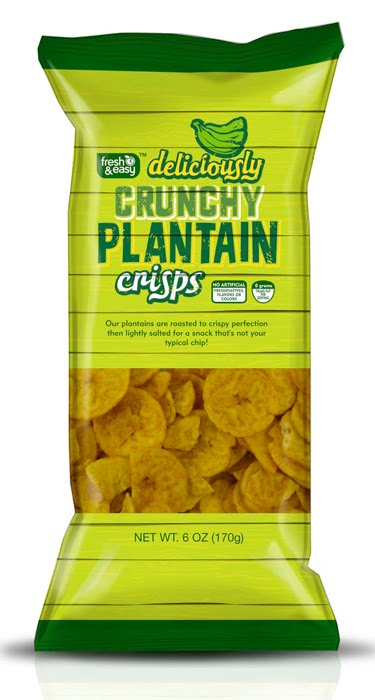
Tesco's Fresh & Easy Neighborhood Market is introducing a new bagged specialty snack food item under its fresh&easy private brand - fresh&easy Deliciously Crunchy Plantain Crisps - in its 168 fresh food and grocery stores in California, southern Nevada and Metropolitan Phoenix, Arizona.

The new all-natural bagged snack item (pictured at top) features roasted dried plantains, which are similar to bananas and used like potatoes throughout the world, including in South and Central America and Africa, in chip form, along with Sunflower Oil and salt. That's it.

Plantains, which originated in Southeast Asia, are highly nutritious and eaten steamed, cooked or as a snack in the mostly tropical regions throughout the world where they're considered a food staple. Due in large part to the many immigrants from Latin America in the U.S., along with creative chefs who've been featuring plantains for a few years now, more an more Americans have been discovering the plantain in its many forms as well.

The fresh&easy brand plantain snack crisps (chips essentially) are made without the use of any artificial preservatives, flavorings or colors.

In fact, the package designer, United Kingdom-based global design firm Pemberton and Whitefoord (P&W), intentionally plays up that message on the package in both graphic design form and by using this simple on-package message: "Our [fresh&easy brand] Plantains are roasted to crispy perfection then lightly salted for a snack that's not your typical chip."

The' not your typical chip' message is in reference to the many commercial brands of potato chips that contain artificial preservatives, flavors colors and other similar artificial ingredients, according to a spokesperson for the packaging design firm.

In terms of the inspiration for the package's graphic design, the P&W spokesperson says: "The hand-painted playful typography and exotic shades of green applied to a wood-textured background helped us to achieve a design suggestive of a tropical fruit stand. Offering this unique product in an appropriately skinny bag will hopefully peak the interest of consumers, and secure it’s spot as a highly marketable item.

"The unusual nature of plantain crisps required a novel design treatment that would differentiate it from more conventional snacking products, while giving strong provenance cues. We were really pleased with the solution, which is simple, original and eye catching. The structure of the design offers plenty of scope for range extensions if it is decided to expand into flavored SKUs."

Plantains, both fresh and in dried (roasted and not roasted) chip snacking form, have become increasingly popular in the U.S. over the last few years. For example, numerous specialty and ethnic supermarkets, along with natural foods stores now offer fresh plantains in produce. Ten years ago few did.

Additionally, dried plantain chips, along with dried banana chips, are available at numerous U.S. natural foods stores and supermarkets in bulk bins in the bulk foods department.

More recently, a number of branded food companies specializing in ethnic and natural food products have introduced packaged plantain chips similar to what Tesco's Fresh & Easy Neighborhood Market is introducing with its fresh&easy private brand item on the market, offering the snack chips for sale in U.S. stores. A few brands have been available for many years at ethnic grocery stores, as well as from ethnic grocers that operate online grocery stores.

For example, the Samai brand offers seven different varieties of plantain snack chips in bags, ranging from its pacific sea salt and garlic flavored SKUs, to one it calls Jungle Chili.

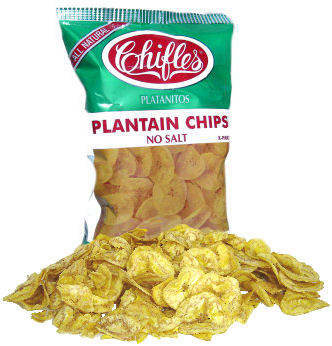
Other packaged plantain snack chip brands include: Mariquitas, Chifles and Chippies. There are others.

Additionally, the Terra Chips brand, which is owned by Hain-Celestial, and is the brand that popularized alternatives to dried potato chips in the U.S. starting in the early 1990's, offers plantain chips in one of its mixed vegetable chip SKUs.

When it comes to private brand plantain chips, Tesco's Fresh & Easy isn't the first grocer to introduce such an item. Trader Joe's has had packaged plantain chips in its stores -Trader Joe's Roasted Plantain Chips - for at least a couple years.

What next? Cassava chips would be a 'natural'

In terms of new product development in the packaged snack foods category (often called salty snacks), If Fresh & Easy Neighborhood Market is looking for its next specialty snack chip item it might want to take a close look at coming out with a packaged dried cassava (also referred to as tapioca or yucca) chip item or two under its fresh&easy brand.

The cassava, which is similar to the plantain and like plantains has has more fiber and potassium than potatoes, is a mainstay in numerous African and South American diets. It's also gluten-free, which is a key selling point in the U.S.

Cassava chips are super-popular in Cuba and throughout South and Central America.

We recently tasted two brands of cassava chips, Joseph Banks brand and PAPA Cassava Chips, which are from Australia. Both companies, along with a couple others, were pitching the chips to American retailers at the Summer Fancy Food Show in June.

The Chifles' brand, mentioned earlier for its plantain chips, also offers a packaged cassava chip variety. Additionally, Terra Chips also mentioned earlier, includes cassava chips in its 'Exotic Harvest' mixed chip SKU. Lastly, Arico Natural Foods Company has introduced a multi-SKU line of bagged cassava chips, which is gaining placement in numerous grocery stores.

Recent Private Brand Showcase Stories

October 16, 2010: Fresh & Easy Neighborhood Market's Private Brand Kids' Cereal Wins Bronze 'Pentaward' in 2010 Packaging Design Competition

October 9, 2010: 'Use Me': Should Reusable Packaging Be Part of Tesco's Sustainable Private Brand Offering? A Student-Designer Thinks So

September 27, 2010: First Items in Fresh & Easy Neighborhood Market's 'eatwell' Brand Frozen Foods Line Arriving in Store Freezer Cases This Week

September 4, 2010: Fresh & Easy Neighborhood Market Unveils New fresh&easy 'goodness' Brand Items and Packaging

August 29, 2010: Fresh & Easy Neighborhood Market Expanding its fresh&easy 'goodness' Co-Branded Line; Launching Numerous New Items

August 18, 2010: Fresh & Easy Neighborhood Market Extending 'eatwell' Healthy Foods' Private Brand Into Dry Grocery Category

July 21, 2010: 'Sipsational' & 'Quenchtastic': Safeway Introduces New 21-Flavor Line of Soft Drinks Under 'refreshe' Private Brand

July 17, 2010: New Fresh & Easy Neighborhood Market Clock-Shaped Private Brand Candy Line Hits the Shelves at Fresh & Easy

July 12, 2010: Tesco Launches Private Brand 'Lasagne Sandwich' in the UK Today...With No Apologies to The Earl of Sandwich

June 24, 2010: New Fresh & Easy Clock Logo-Shaped Candies Are A Pretty Sweet Idea

May 11, 2010: Tesco Might Want to Get 'fresh & naked' at 'fresh & easy'

April 2, 2010: Fresh & Easy's New 'EatWell' Healthier Fresh, Prepared Foods Brand to Hit Stores on April 7

April 11, 2010: When it Comes to Fresh, Prepared Foods, New York City's Duane Reade is Simply 'deLish' for Walgreens

February 22, 2010: Food, Drug Retailers With Stores in California, Nevada & Arizona Honored for Private Label-Store Brands' Excellence

May 18, 2009 piece - Strategy Session: Tesco's Fresh & Easy Needs to Move From its One Store Brand Fits All Strategy to A 'Three Brand' Store Brand Strategy

March 9, 2009: An English Village, A British Fresh Chicken Brand and Tesco Fresh & Easy's New 'Buxted' Discount Fresh Meat Brand: What Do All Three Have in Common?

[Private Brand Showcase is a regular feature of Fresh & Easy Buzz. In it we report on, write about and offer analysis on the fast-growing private or retailer brand (sometimes called private label) movement, along with featuring various private brand products being offered by Tesco's Fresh & Easy Neighborhood Market, along with those of other grocers and retailers operating various types of formats.]

Fresh & Easy Neighborhood Market's Private Brand Kids' Cereal Wins Bronze 'Pentaward' in 2010 Packaging Design Competition


Private Brand Showcase

The international design firm Pemberton and Whitefoord (P&W) has won a Bronze "Pentaward" in the "Distributors'-Retailers' own brands (food)" category for its packaging design of Tesco Fresh & Easy Neighborhood Market's 'fresh&easy' private brand Kids' Cereal line (pictured at top and below) at the 2010 Pentawards competition, which was held this year in China at the "Expo 2010 Shanghai," which is currently going on. So far, over 6 million people have attended the mega-expo.
Pentawards, which is in its fourth year, is an annual global competition devoted to packaging design in all its forms. It's open to everybody in all countries who are associated with the creation and marketing of packaging. The packaging design competition's website is here.

Competition winners receive Bronze, Silver, Gold, Platinum or Diamond "Pentawards," based on the creative quality of their work. The Diamond award is the highest, followed by Platinum, Gold, Silver and Bronze.

Diamond, Platinum and Gold awards aren't always awarded in every sub-category, such as the Distributors'-Retailers' own brands (food)," segment.

There are four product categories: Beverages, Food, Body, Other Markets and Luxury. Within the four product categories are various sub-categories, such as the distributo-retailer private brand segment mentioned above.

You can view the various categories and sub-categories, along with all the respective winners, here.

The 'fresh&easy' Kids' Cereal line, which the grocery chain introduced earlier this year, comes in three kid-friendly varieties: Cookie Bites, Cocoa Sharks and Apple & Cinnamon Smiles.

Here's what United Kingdom-headquartered design agency P&W said about the approach it took in designing the award-winning product packaging: "We transformed the boxes into individual characters, each one about to guzzle back a bowl of their favorite cereal. Their bold, graphic style is unique to the market and stands apart from the more visually cluttered branded competitors. To increase engagement and repeat purchase, and imbue the packs with Fresh & Easy’s personality, we also created games, such as mazes and fun word-finders, to feature on back of pack."
The back of the breakfast cereal package (like the SKU pictured above) features various games designed to draw - and hold - the little consumers' attention - and build brand loyalty.

The private brand Kids' Cereal line is made without the use of artificial colorings and flavors. It contains sugar rather than high-fructose corn syrup as a sweetener.

While it's true that packaging design doesn't guarantee repeat sales of food and grocery products - the quality of the product has to do that - it does act as a billboard on the grocery shelf, generating shopper interest and customer product trial. As such, packaging is arguably the most important marketing communications aspect for a food, grocery or non-food packaged goods product.

We like the 'fresh&easy' brand Kids' Cereal line packaging - and in our analysis it does generate customer trial, since it stands out on the store shelves as a unique-looking package.

P&W did its job for Tesco's Fresh & Easy in that regard. And the judges at the annual Pentawards packaging design competition apparently think so as well, awarding it a Bronze Medal in the "Distributors'-Retailers' own brands (food)" category.

P&W, which has been working with Tesco's Fresh & Easy Neighborhood Market since the beginning in 2006-2007, has designed over 1,000 SKUs for the grocer, according to a spokesperson for the firm.
Besides Fresh & Easy, U.S. drug chain Duane Reade's 'de lish' private brand Skyline packaging took home a Silver "Pentaward" for the designer, New York City-based CBX. See the silver award-winning packaging here.

Duane-Reade is owned by Walgreens, the leading drug chain in the United States.

The Fresh & Easy Neighborhood Market and Duane Read private brand packaging designs are the two winners representing American retailer's receiving awards in the retailer brands sub-category.

You can use the search function here to view all of the 2010 Pentaward competition winning packaging designs. Do check out the food and beverage categories. There are some examples of excellent packaging designs represented among the numerous winners.

Recent Private Brand Showcase Stories


Friday, October 15, 2010

Safeway Shelving 'The Market' Small Store Format; Won't Be Part of its Strategy Going Forward


Breaking Buzz - News & Analysis

Smaller format stores, except its soon to be shelved 'marketside by Walmart,' may be in at Walmart but Pleasanton, California-based Safeway Stores, Inc. is sticking with a single-format strategy - its"Lifestyle"format supermarkets, which average 43,000-55,000 square-feet, with some exceptions - and saying no to further development of its two-store small-format 'The Market' fresh food and grocery venture.

Safeway Stores' CEO Steve Burd confirmed yesterday what we've been saying in Fresh & Easy Buzz for well over a year - which is that Safeway's 'The Market' will not be a part of the grocer's retail format strategy going forward.

In a conference call yesterday as part of Safeway's reporting of its third quarter 2010 results, Burd said the grocery chain does not plan to build the two-store (Long Beach and San Jose, California) "The Market" into a chain of small-format stores.

Here's what the Safeway chief said:

"The good news is that we’re batting a thousand. We built two ['The Market'] stores and they both make money. I think there is no one else that’s created a store that small that can boast that kind of a batting average. At the same time when we went into the small store format we said that we weren't going to make it a big piece of our strategy unless we thought it represented a very significant opportunity. I would tell you that if you can’t build 300 of these for a company like us, then it’s not meaningful, say, over a five-year period.

"So, we think that we learned a lot from the smaller store and some of those concepts we are applying to our main fleet of stores. I think we might have communicated at the last Investor Conference or maybe in one of these earnings calls, we don’t see creating 300 small stores as a basic part of our strategy. Will we occasionally build a store that might be 20,000 square feet, I would say occasionally in some pretty unique circumstances, but we learned enough to conclude that for us it was not a new format that we were going to try to grow and make a big piece of our offering."

The San Jose, California 'The Market' format store - 'The Market by Safeway' - which opened in 2009 - is 21,000-24,000 square-feet. The Long Beach store - 'The Market by Vons' - which is in a building that previously was a standard Vons supermarket, is about 15,000 square-feet. It opened in May 2008.

While Burd didn't say at the most recent Safeway Investor conference earlier this year that "The Market" would not be a part of a multi-format strategy for the grocery chain going forward, he hinted at it at the conference, as he has in the past, at least for those of us who watch Safeway closely.

In fact, Burd spelled out the metrics required from the format in order for Safeway to go forward with it as early as the end of 2008

In December 2008 at that year's annual investor's meeting, eight months after the first "The Market" store in Long Beach, California opened, Burd said the results to date were less than thrilling, as we reported in this story - December 12, 2008: Competitor News: Safeway CEO Steve Burd Says Small-Format 'The Market' Is 'Good' So Far But Not 'Great;' But Must Be 'Great' in Order To Expand. His then assessment on the performance of the first small-format 'The Market' store eight months on was that it's: "good, not great."

At the 2008 meeting he said Safeway planned to open at least two more of the small-format 'The Market' stores in 2009.

However, the grocer opened just one additional store in 2009, the unit in downtown San Jose, California, and hasn't opened any additional stores in the format since then. We wrote about what was the then planned third store in this July 25, 2008 story: Breaking Competitor News: Safeway Stores, Inc. Plans to Open A Small-Format 'the market by Vons' Grocery Store in Downtown Los Angeles.

In December 2008 the Safeway CEO said once the additional two 'The Market' format stores are open, "Unless the results go from 'good to great' and we feel we can open 30 -to- 50 of these per year, it won't make enough difference for these stores to be more than an experiment."

As Burd said yesterday, Safeway may occasionally build a store in the 20,000 square-foot range. But providing his own question and answer in a sentence he qualified that rather clearly, saying: "Will we occasionally build a store that might be 20,000 square feet? I would say occasionally in some pretty unique circumstances."

'The Market" as a multi-store second format for Safeway Stores, Inc. is history.

We're told there are no plans at present to close either the San Jose or Long Beach stores though. As Burd said, they are making (some) money. In the case of the two, we can tell you this: The San Jose store is doing much better than the Long Beach unit.

In early 2008 Safeway had the Cornish & Carey commercial real estate team help it find five or six locations in the San Francisco Bay Area - the downtown San Jose site was one of the locations - for its "The Market" format, which it had only recently finished developing at the time. The firm and Safeway located the sites but the downtown San Jose location is the only one to be built and opened.

A key reason Safeway souoght out the locations was because in January 2008 Tesco announced its plans to open an initial 37 Fresh & Easy Neighborhood Market fresh food and grocery stores in Northern California - 19 in the Sacramento region and 18 in the Bay Area.

Safeway had first-hand experience with Tesco. United Kingdom-based Tesco was the first major chain in the world to establish a food and grocery e-commerce site and combine the online ordering element with home delivery. In the 1990's, when Safeway was interested in doing the same, it partnered with Tesco in Groceryworks, which was Safeway Stores' initial online/home delivery grocery service. The partnership didn't last long. The two chains parted ways and Safeway took the business in-house, which is where it remains today.

As a result of this first hand experience, along with the fact Tesco is a very respected global retailer, Safeway, which already had been considering a small-format of its own, ratched up the development process, creating 'The Market,' and sought out the various store locations in its home-turf San Francisco Bay Area, where it's headquartered, in part as a defensive move against Tesco, which was supposed to open the first Fresh & Easy stores in the region in early 2009. That never happened. Tesco now plans to open the first batch of its Fresh & Easy Neighborhood Market stores in the Bay Area in early 2011.

In the nearly three years since the first Fresh & Easy stores opened - there are currently 168 units; soon to be 155 after Tesco closes 13 stores by November 2, 2010 - Tesco has struggled with Fresh & Easy, losing hundreds of millions of dollars and is closing in on a billion dollar loss. The retailer says it will become profitable in its 2013 fiscal year, at which time it says it plans to have 400 of the 10,000 square-foot Fresh & Easy markets open and operating. But since its projecting a loss in the $250 million range for its fiscal 2010/11 year which ends in February 2011, that's going to be a tall order to achieve. [See: 13 Closing Fresh & Easy Stores List.]

Tesco's struggle with Fresh & Easy has no doubt played some part in Safeway's decision to drop 'The Market' from its future strategic plans, in our analysis, although Burd clearly laid out the metrics back in December 2008. It was a test - in fact a by-the-book test - and as is the case with tests, a decision has now been made.

Additionally, Safeway Stores' CEO Steve Burd is on the record as early as March 2008, saying at the time, as we reported in this story - March 12, 2008: Safeway CEO Steve Burd: 'I'm Not Particularly Worried About Tesco's Fresh & Easy Grocery Stores in California' - that Tesco's Fresh & Easy venture doesn't worry him much as a competitor.

The bottom line is Safeway doesn't really need a dedicated 15,000 square-foot store format in order to sell fresh-prepared foods; it does it just fine in its supermarkets. And if a particular urban location requires a smaller store, it can do a 20,000 square-foot version of its "Lifestyle" format, which "The Market" is essentially a smaller version of anyway.

In a series of stories so far this year we've offered a roadmap to where Safeway Stores, Inc. is going in terms of its format strategy: 43,000-55,000 square-foot "Lifestyle" format stores with expansive fresh food departments and a combination of price/value focused and more upscale food and grocery merchandising elements.

For example, read these three recent pieces from the blog:

>July 25, 2010: Safeway to Start Construction on New Pleasanton, California Flagship Store Soon; Thanksgiving 2011 Target Opening

>August 2, 2010: Safeway Unveils Plans For New 'Lifestyle' Format Store Designed to Fit Today's Berkeley, California Lifestyle

>April 8, 2010: The Branded 'Signature Cafe' in Safeway Stores' Soon to Open 'Social Safeway' in Washington D.C. Should Turn A Few Heads

Like Safeway with its 'The Market' fresh food and grocery store concept, Walmart is preparing to put an end to its 'marketside by Walmart' combination fresh food and grocery format, as it begins to launch a new generation of smaller format stores. [See - September 23, 2010: Revisting 'marketside by Walmart': Format As We Know it On the Way Out But Some or All Of the Four Stores Could Be Converted and October 13, 2010: Simon Says: Walmart U.S. CEO Outlines Smaller Store Strategy and Plans; Walmart to Offer Groceries Online in USA.

Safeway's 'The Market,' Walmart's 'marketside by walmart' and Tesco's 'Fresh & Easy Neighborhood Market' are all three very similar formats - all three are small-format stores that focus on fresh foods with limited assortments of groceries and perishables, for example - and all were launched at about the same time - late 2007 for Fresh & Easy, and mid-2008 for Safeway and Walmart's small-store ventures.

Time will tell if it's a positive development for Tesco to have its Fresh & Easy Neighborhood Market small-format fresh food and grocery chain as the remaining one of the three similar formats. But unlike Safeway and Walmart, Tesco doesn't currently have any other formats to fall back on in the U.S. should that development be a negative and not a positive one.

Related Stories:

March 5, 2008: New Details and Analysis About Safeway's Small-Format Summer SF Bay Area Surprise for Tesco's Fresh & Easy Neighborhood Market

March 12, 2008: Safeway CEO Steve Burd: 'I'm Not Particularly Worried About Tesco's Fresh & Easy Grocery Stores in California'

May 15, 2008: Breaking News: Safeway Opens its First Small-Format 'The Market' Grocery Store Today in Long Beach, California

June 5, 2008: Breaking News: Safeway Stores, Inc. Nearing Negotiation End-Game For its Second Small-Format 'The Market' Store Site; This One in San Jose, California

July 8, 2008: Southern California Market Report: Safeway Stores,'the market by Vons' Mass-Mails First Advertising and Promotional Flyer to Vons Club Card Members

June 6, 2008: More on Safeway's 'The Market' Format: 20-Year Food Retailing Industry Vet Offers Observations and Analysis on 'the Market by Vons,' Long Beach, CA

July 25, 2008: Breaking Competitor News: Safeway Stores, Inc. Plans to Open A Small-Format 'the market by Vons' Grocery Store in Downtown Los Angeles

January 30, 2009: Competitor News: Safeway Stores, Inc. Confirms Second Small-Format 'The Market' Unit to Be in San Jose, CA; Fresh & Easy Buzz Nailed it in June, 2008